Lake Orta
A lake with a thousand-year history, inhabited since before the Romans. Its heart is San Giulio Island, with its Benedictine monastery, reachable in a few minutes by boat from the lakeside villages.
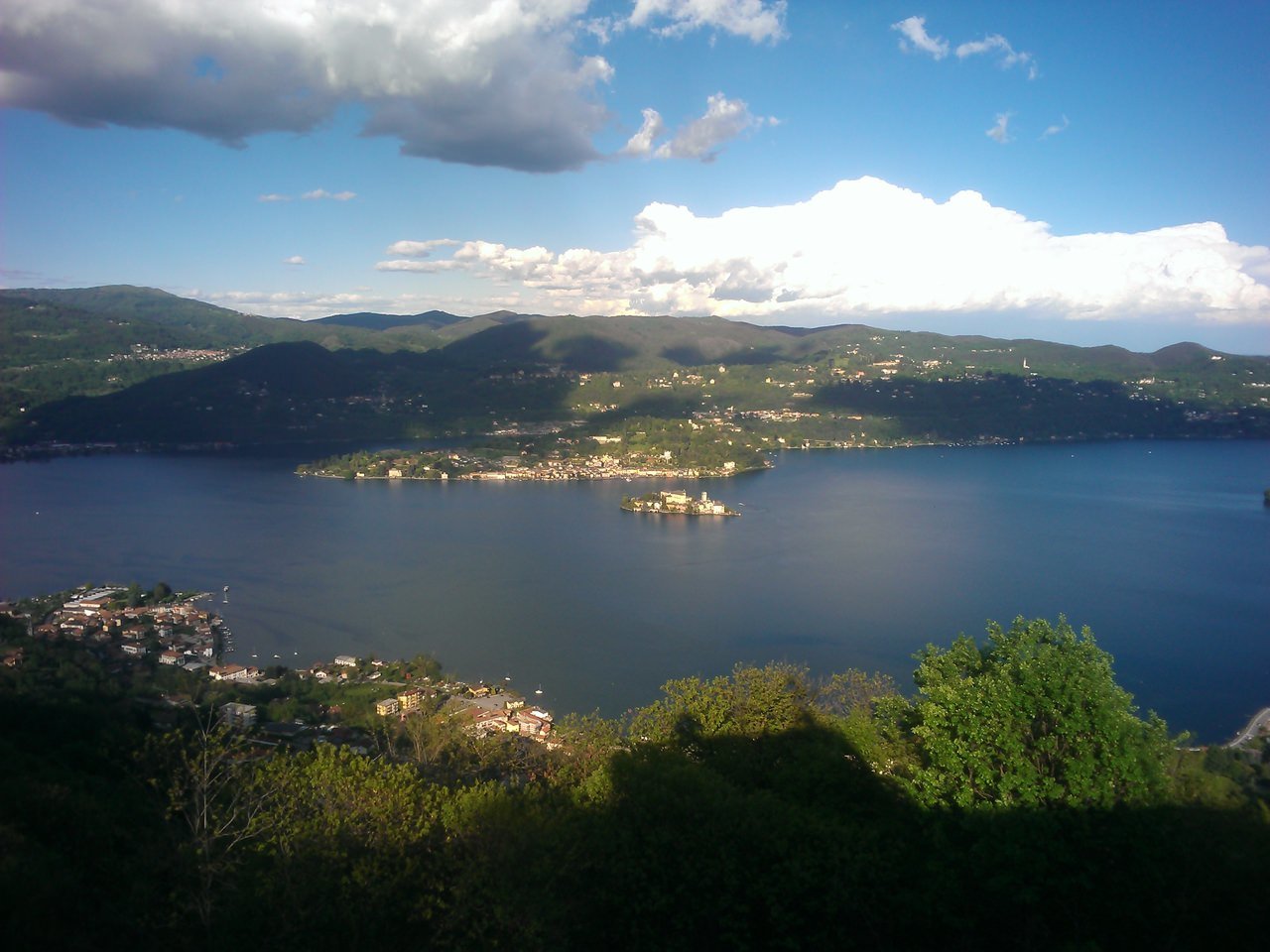
The history of the Cusian lands is ancient. This corner of Piedmont, squeezed between the irrigated Novara plain and the first hills that slowly rise northward into the mountains of Ossola, saw human presence well before the rise of Roman power.
The first inhabitants of the San Giulio Riviera were probably the Ligurians, who over time came under Celtic influence; they were then conquered by the Gauls and finally by the Romans, who used the Cusio mainly as a military outpost.
Paolo Diacono, in his Historia Longobardorum, tells of Mimulfo, Duke of San Giulio Island, who betrayed King Agilulfo by selling himself to the Franks and was beheaded for it. The island was the seat of a Lombard duchy, then part of the Carolingian Empire.
In 957 Berengario II, fighting Emperor Otto I for the throne of Italy, locked himself inside the island — by then a fortress — and endured a long siege. Tradition holds that it was in those months that Guglielmo da Volpiano was born, a Benedictine monk and one of the most important figures of European culture around the year 1000.
The episcopal state dates from 1219 and lasted until the end of the 18th century, with the definitive cession of power to the House of Savoy in 1817.
The imposing building on the island dates to the mid-19th century and can still be seen today: first a seminary, today home to the Benedictine monastery "Mater Ecclesiae".
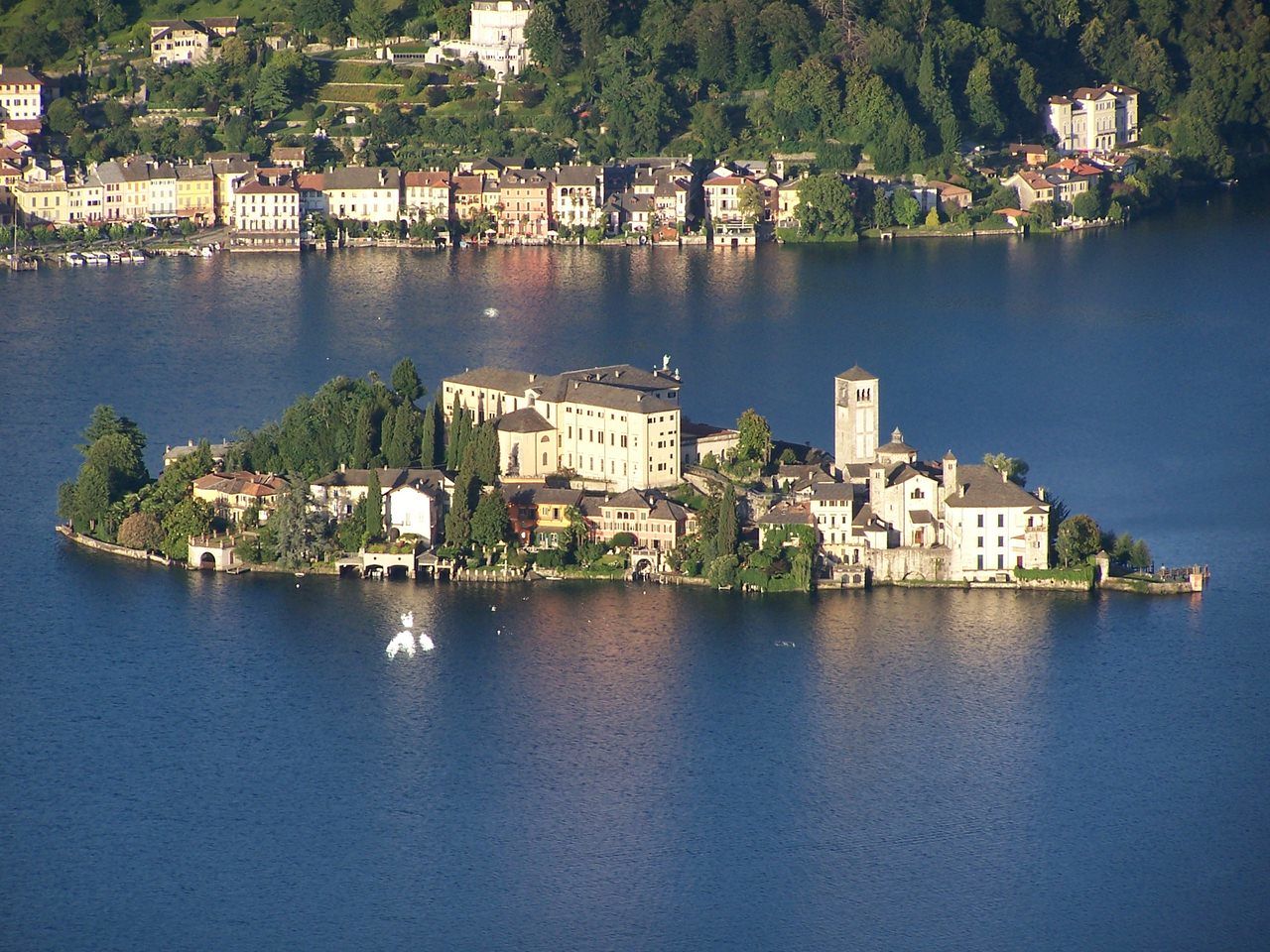
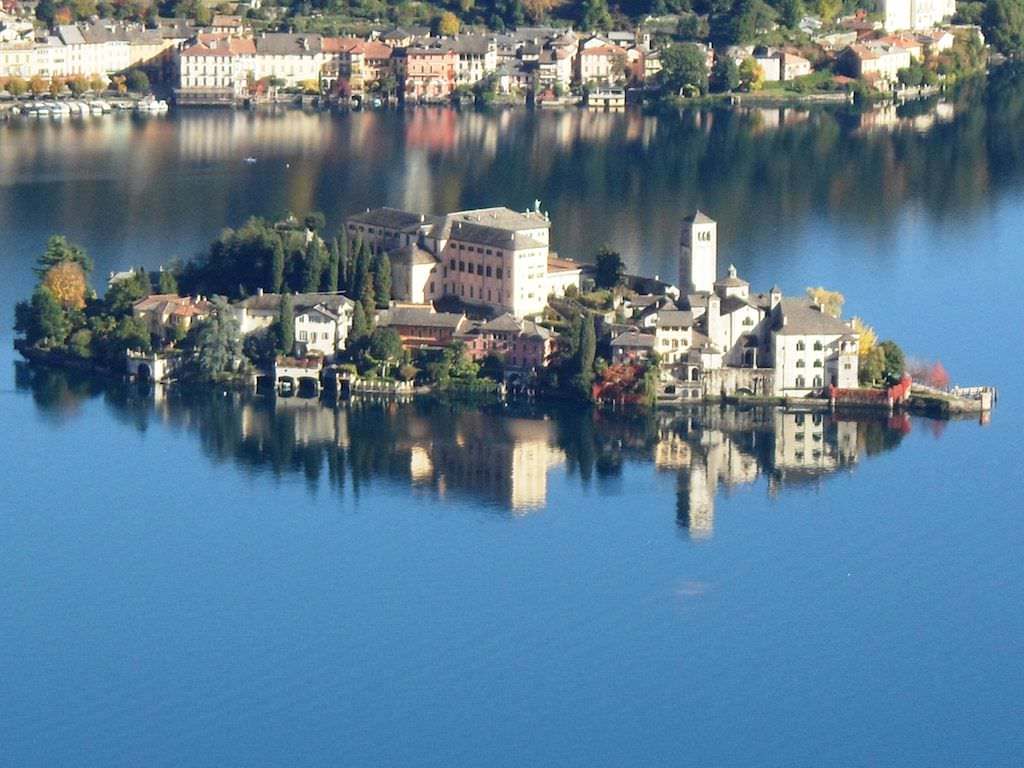
- San Giulio Island and the Mater Ecclesiae monastery
- Orta San Giulio, one of Italy's most beautiful villages
- Walks and boat trips on the lake
- Landscape between the Novara plain and the Ossola mountains